The most dangerous space on many industrial sites: What regulated industries are missing beyond the factory door
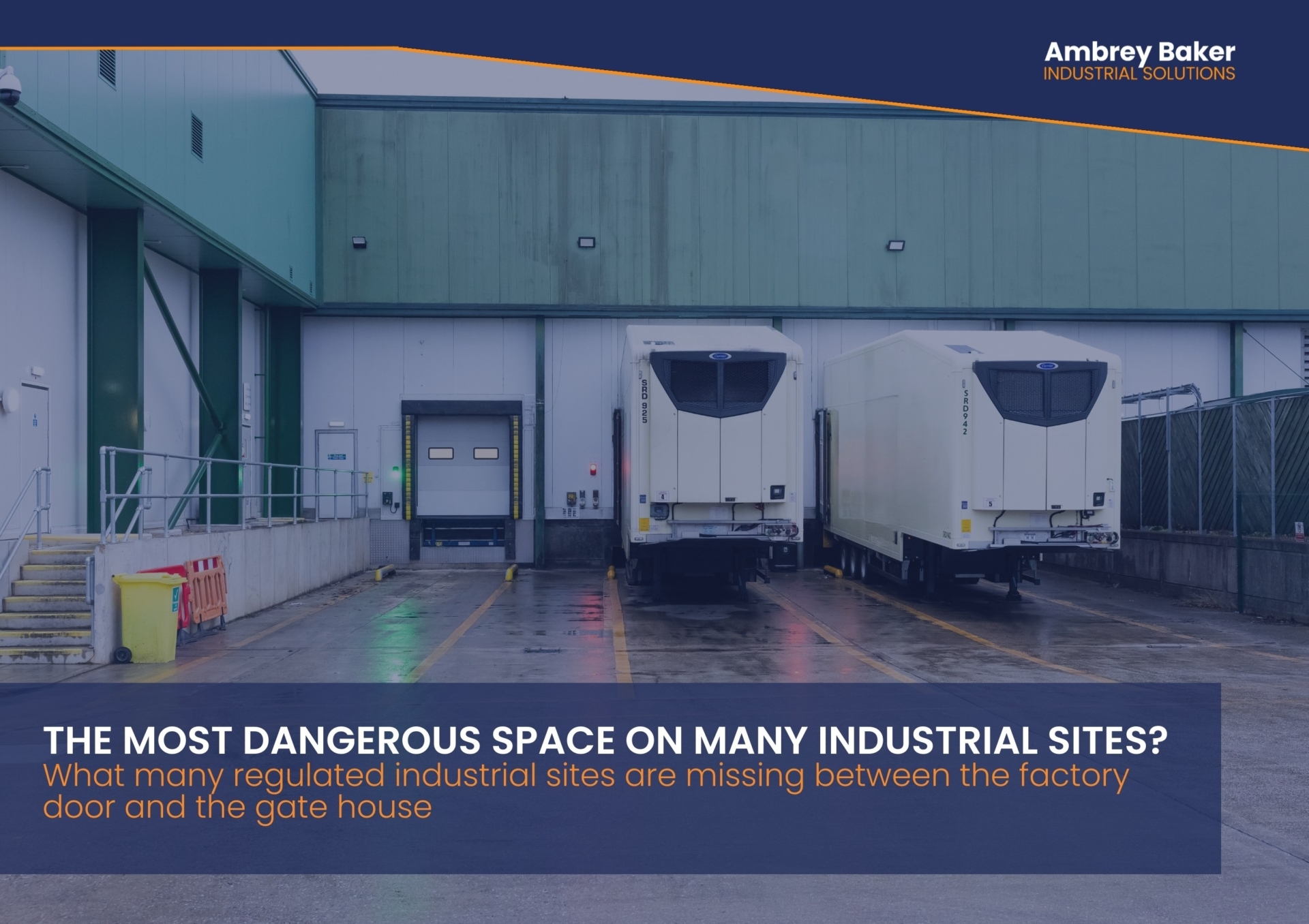
On regulated UK industrial sites, the highest concentration of unmanaged risk increasingly sits outside the building. Car parks, lorry parks and service yards have become the point where safety law, audit frameworks and operational pressure intersect. For food factories, cold chain operators, chemical plants and pharmaceutical facilities, this external space is now one of the most scrutinised parts of the estate, even though it is still frequently designed as residual area.
The statistics explain why this matters. Health and Safety Executive data shows that workplace transport accounts for around 5,000 reported injury accidents each year in Great Britain, with pedestrians being struck by vehicles remaining one of the most common fatal accident causes. Over the past decade, workplace transport incidents have been responsible for around 50 worker deaths. The majority of these incidents occur away from public highways, within yards, access roads and parking areas where vehicle and pedestrian movements overlap under routine operating conditions.
Industrial yards concentrate these risks by design. HGVs, vans, cars and pedestrians converge in constrained spaces, often at predictable peak times linked to shift change, delivery windows or production cycles. On many sites, these patterns were never fully modelled at design stage. Instead, circulation has evolved through operational workaround, signage and informal rules that rely heavily on local knowledge and constant supervision.
From a legal perspective, this space is firmly within scope. The Health and Safety at Work etc Act 1974 places a duty on employers to protect employees and others affected by their undertaking, which includes visiting drivers and contractors. The Management of Health and Safety at Work Regulations 1999 require suitable and sufficient risk assessments, and HSE inspectors regularly look to vehicle movement arrangements when assessing compliance. The HSE’s long standing guidance on workplace transport makes clear that segregation, visibility, lighting and the reduction of reversing are core expectations rather than optional good practice.
For food, pharmaceutical and chemical operators, the compliance picture extends further. Food manufacturers certified to BRCGS standards are expected to demonstrate effective control of external areas as part of good manufacturing practice. Site layout, traffic routes and segregation between staff, raw materials, waste and finished goods are all in scope. Auditors increasingly raise findings where car parks and service yards undermine hygiene zoning or site security, even if internal controls are robust.
Pharmaceutical sites operating under UK GMP face similar scrutiny. Control of access, prevention of contamination and traceability are interpreted broadly, particularly on high value or sterile operations. Uncontrolled parking, shared access routes and unclear waiting arrangements for drivers can weaken the overall compliance narrative, regardless of how well production areas perform.
Chemical sites subject to the Control of Major Accident Hazards Regulations must explicitly consider vehicle movements within their safety reports. Emergency access, muster points and traffic routing assumptions are tested in scenario planning. Informal queuing or encroachment into defined zones can quickly become a regulatory issue rather than an operational inconvenience.
Operational data supports that assessment. Near miss reporting from large industrial estates consistently shows spikes around shift change and delivery peaks. These events rarely result in reportable accidents, but they drive safety interventions, management time and audit scrutiny. Over time, they also shape workforce perception of how seriously safety is taken beyond the factory door.
This is where specialist industrial design input becomes valuable. Ambrey Baker works with operators and project teams to assess external areas as operational systems rather than leftover space. Its approach combines safety risk assessment, regulatory awareness and practical understanding of how industrial sites function day to day. By engaging with site managers, SHEQ teams and logistics operators, the practice helps identify where layout, circulation and parking arrangements are creating hidden risk or undermining compliance.
In many cases, the outcome is not wholesale redesign but targeted intervention. Ambrey Baker’s work often focuses on clarifying vehicle routes, improving segregation, rationalising parking layouts and supporting planning and audit submissions with evidence based design. For regulated industries, this can strengthen safety cases, reduce audit observations and support smoother planning discussions. The aim is not to over engineer the yard, but to make it predictable, defensible and aligned with the same standards applied inside the building.
RESOLVE COMPLEX INDUSTRIAL DESIGN OR CONSTRUCTION CHALLENGES WITH CONFIDENCE.
For a no obligation initial consultation with one of the UK’s leading industrial construction and technical advisory experts, contact us today to gain clear, practical guidance on critical technical, engineering, and construction issues.