Hygiene zoning: Planning a food factory that supports growth, food safety and audit readiness
Moving from a small production unit into a larger food manufacturing facility can appear daunting. The business may be taking on greater production volumes, more staff, additional equipment, new storage requirements and more demanding customer expectations at the same time. For many producers, this is also the point when BRCGS certification, retailer approval or more detailed customer audits become a commercial requirement.
The building therefore needs to do more than accommodate production. It needs to support safe food handling every day, provide clear control over people and product movement, and give the business a practical foundation for future growth. Hygiene zoning is central to this process.
Hygiene zoning is the method of planning how raw materials, packaging, people, finished products, cleaning equipment, waste and maintenance activities move through a facility. It identifies where separation, control points and restricted access are needed to reduce the risk of contamination.
The detail varies between businesses. The right approach depends on the product and process. A chilled ready-to-eat food producer will require different controls from an ambient bakery, frozen-food packing operation or sauce manufacturer. Every facility should begin with its food safety plan and HACCP assessment.
The layout should reflect the full production process, from deliveries and goods-in through storage, preparation, production, packing and dispatch. Raw materials should enter through controlled areas with space for checks and storage. Finished products should move to dispatch without passing back through raw or preparation areas. Waste should follow a separate, controlled route where practical.
Food hygiene legislation requires premises to allow adequate cleaning and disinfection, prevent contamination and provide sufficient working space for hygienic operations. Regulation (EC) No 852/2004 also requires food premises to avoid air movement from contaminated areas into cleaner areas where this could create a risk.
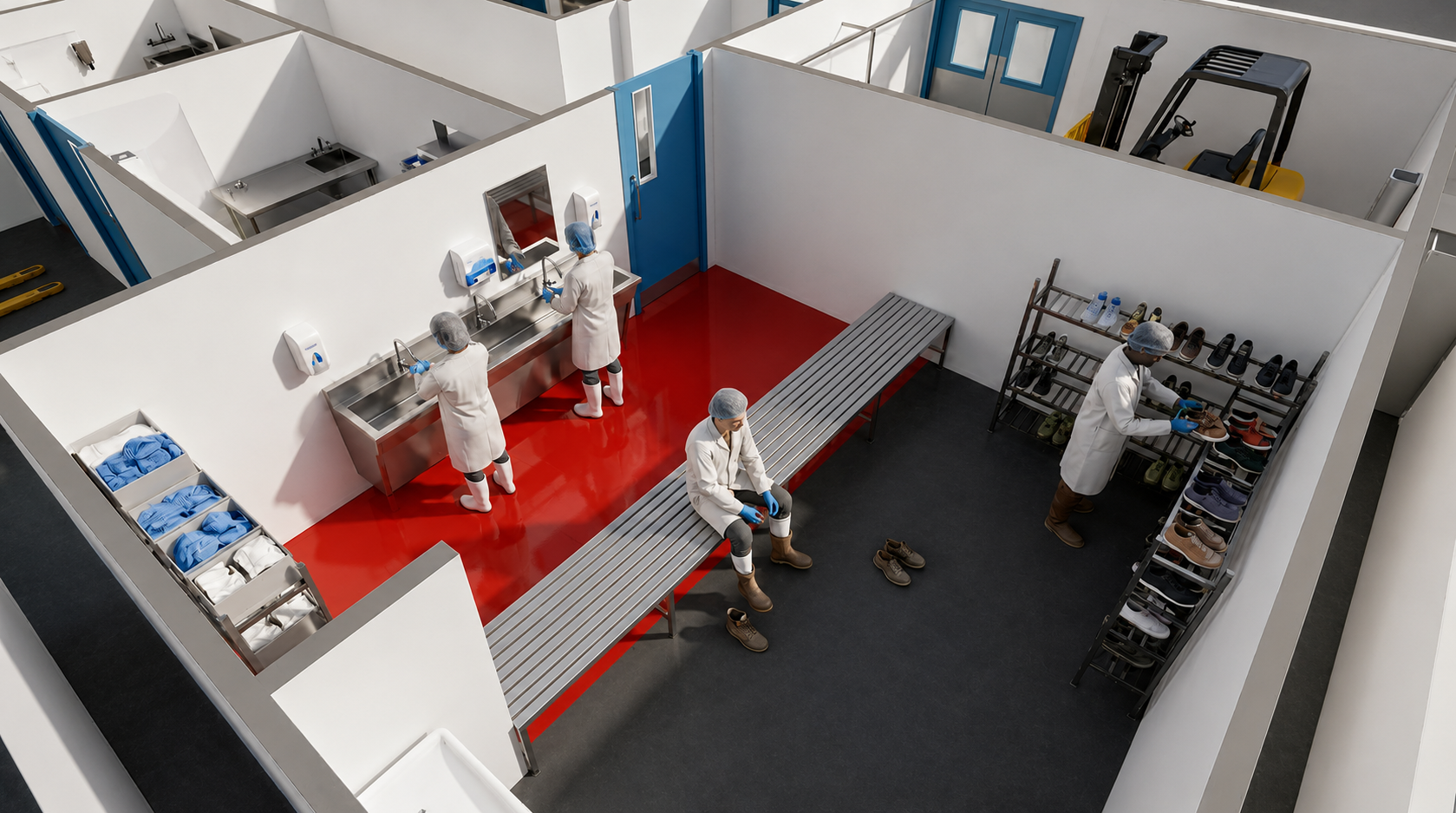
Staff movement needs the same level of planning. Changing rooms, lockers, welfare facilities, entrances and handwashing points should support clean access into production areas. Routes between car parks, waste areas, raw-material handling and ready-to-eat production need to be reviewed carefully. A simple route on a drawing can create avoidable crossover once the site is operating.
Higher-risk production areas may need enhanced controls. This can include dedicated rooms, controlled entrances, separate changing arrangements, restrictions on equipment movement and clear rules for protective clothing. The required level of control depends on the product, processing method, storage conditions, shelf life and hazards identified through the food safety assessment.
The building fabric also needs to support hygienic operations. Floors, walls, ceilings, doors, drainage and service routes should be durable, accessible and easy to clean. Equipment should have sufficient clearance for cleaning, inspection and maintenance. Poorly positioned drains, inaccessible services and cramped equipment layouts can create long-term cleaning and maintenance issues.
Allergen controls should be considered early in the design process. Depending on the products and allergens handled, this may involve dedicated storage, separate equipment, controlled production scheduling, validated cleaning or defined production areas. The Food Standards Agency states that raw and ready-to-eat food must be adequately separated through work areas, surfaces and equipment.
For BRCGS and retailer audits, hygiene zoning should be demonstrated through more than the layout drawing. The site should have clear process-flow diagrams, zoning plans, HACCP records, cleaning procedures, allergen controls, staff-training records and maintenance arrangements. These documents should reflect how the facility operates in practice.
A well-planned factory helps a growing food manufacturer maintain control as production increases. It supports safer working practices, clearer routines, stronger cleaning controls and more effective audit preparation. It also reduces the risk of costly changes after the business has moved into the facility.
Ambrey Baker supports food manufacturers through consultancy, feasibility reviews, hygiene-zoning design coordination, refurbishment and construction delivery. Our Four decades of experience in hygienic food environments, cold storage and live operational sites helps clients create facilities that support safe production, customer requirements and future growth.