Why Hygienic Cladding Is Central to Compliance, Performance and Asset Value
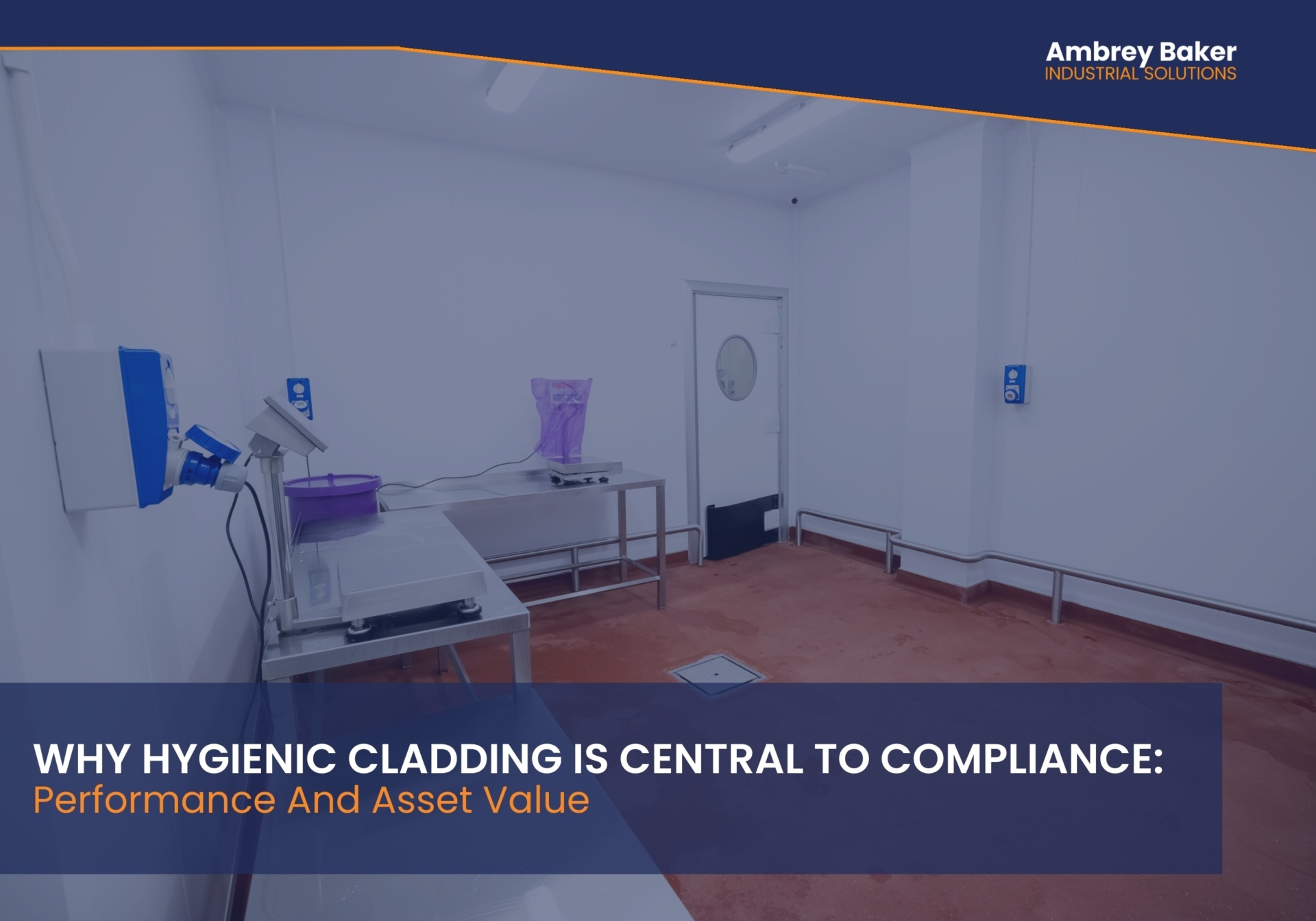
For facilities owners in food, pharmaceutical and advanced manufacturing sectors, hygiene is not confined to process lines or cleaning regimes. It is built into the fabric of the building itself. Walls, ceilings and junctions form part of the contamination control system, influencing compliance, operational resilience and long-term asset value. Hygienic cladding sits at the centre of this conversation, not as a decorative layer, but as a core element of regulated infrastructure.
Regulatory pressure is the starting point. In the UK, food production environments must meet hygiene standards enforced by the Food Standards Agency, including the requirement that surfaces are smooth, non-absorbent and capable of being effectively cleaned and disinfected. These principles are embedded within HACCP frameworks, which are legally required across food operations. The Food Standards Agency estimates that foodborne illness affects millions of people each year in the UK, with preventable hygiene failures contributing significantly to outbreaks. While process control is critical, regulators increasingly recognise that poor building fabric creates persistent risk that procedures alone cannot mitigate.
In pharmaceuticals, expectations are even more explicit. The Medicines and Healthcare products Regulatory Agency enforces Good Manufacturing Practice, including stringent requirements around cleanability, surface integrity and contamination control. GMP Annex 1 and ISO cleanroom standards demand that facilities demonstrate not just cleanliness, but the ability to sustain it over time. Surface degradation, micro-cracking or poorly sealed interfaces become compliance issues rather than maintenance inconveniences. For facilities owners, this places building materials under the same scrutiny as production equipment.
Advanced manufacturing sectors such as electronics, aerospace and precision engineering face similar pressures. ISO 14644 cleanroom classifications define maximum allowable airborne particle counts, but achieving and maintaining these environments depends heavily on the performance of walls and ceilings. Even microscopic surface imperfections can trap particles and compromise yields. In these environments, cladding systems are a frontline defence against variability and loss.
This is why traditional finishes often fall short. Painted blockwork, plasterboard and tiled systems introduce joints, grout lines and porous surfaces that are difficult to maintain at high hygiene standards. Hygienic cladding systems, including insulated composite panels, PVC linings and specialist GRP solutions, are engineered to provide seamless, non-porous surfaces that resist moisture ingress and bacterial growth. Factory-manufactured panels offer consistent quality and predictable performance, reducing the risk inherent in site-applied finishes. The shift towards modular systems reflects a broader industry move to design hygiene into the facility rather than manage around its absence.
However, material choice alone does not guarantee performance. Installation quality is decisive. Joints, penetrations and interfaces between floors, walls and ceilings are the most common points of failure in hygienic environments. The Health and Safety Executive identifies poorly designed or maintained surfaces as a recognised contamination risk. For facilities owners, this translates into a need for rigorous detailing, proper coving, sealed service penetrations and robust protection at impact zones. Regulators and auditors routinely focus on these details, because experience shows that contamination often originates where construction shortcuts were taken.
Hygiene requirements also sit alongside other performance demands. Fire safety remains a fundamental obligation under UK Building Regulations Approved Document B. Hygienic cladding must therefore balance cleanability with fire resistance, often requiring mineral wool cores or tested system solutions in higher-risk areas. In temperature-controlled or high-risk manufacturing environments, chemical resistance, impact durability and thermal performance further complicate specification decisions. These are not competing priorities, but interdependent ones that must be resolved holistically.
From an operational perspective, the benefits of well-designed hygienic cladding extend beyond compliance. In food factories, faster and more effective cleaning reduces downtime between shifts. In pharmaceutical cleanrooms, smooth, sealed surfaces simplify validation and reduce the frequency of remedial work. In logistics and mixed-use industrial facilities, insulated cladding contributes to thermal stability and lower energy demand, supporting both cost control and carbon reduction targets. These efficiencies compound over the life of the facility.
Lifecycle value is increasingly central to board-level decision-making. Hygienic cladding systems are exposed to frequent wash-down, aggressive cleaning agents and mechanical impacts. Poorly specified materials degrade quickly, creating a cycle of patch repairs and increasing compliance risk. By contrast, systems designed with impact-resistant finishes, stainless steel protection and replaceable components offer longer service life and reduced whole-life cost. Many cladding materials, particularly steel-based systems, benefit from high recycling rates, aligning with sustainability and net zero strategies that facilities owners are under growing pressure to demonstrate.
There is also a human and reputational dimension. Staff work more confidently and efficiently in environments that are visibly clean, well-maintained and designed for hygiene. Customers, auditors and regulators draw conclusions quickly from what they see. Cracked tiles, peeling coatings or poorly sealed joints signal latent risk, while seamless hygienic surfaces communicate control, professionalism and investment in quality. In competitive supply chains, these signals influence trust and contract decisions.
Hygienic cladding should therefore be viewed as strategic infrastructure. It underpins compliance with food hygiene law, GMP and cleanroom standards. It supports operational efficiency, energy performance and workforce wellbeing. It protects asset value and reputation over the long term. For facilities owners planning new builds, refurbishments or compliance-driven upgrades, early engagement with specialists who understand both regulatory frameworks and construction detail is critical.
In regulated environments, the strength of a facility is often judged by its surfaces. Investing in hygienic cladding is an investment in resilience, compliance and sustained performance.
RESOLVE COMPLEX INDUSTRIAL DESIGN OR CONSTRUCTION CHALLENGES WITH CONFIDENCE.
For a no obligation initial consultation with one of the UK’s leading industrial construction and technical advisory experts, contact us today to gain clear, practical guidance on critical technical, engineering, and construction issues.
Paul Waldeck BEng(Hons), CEng., MICE., MIStruct.E, MIMech.E., MASHRAE